


India seeks unified marketing for events sector
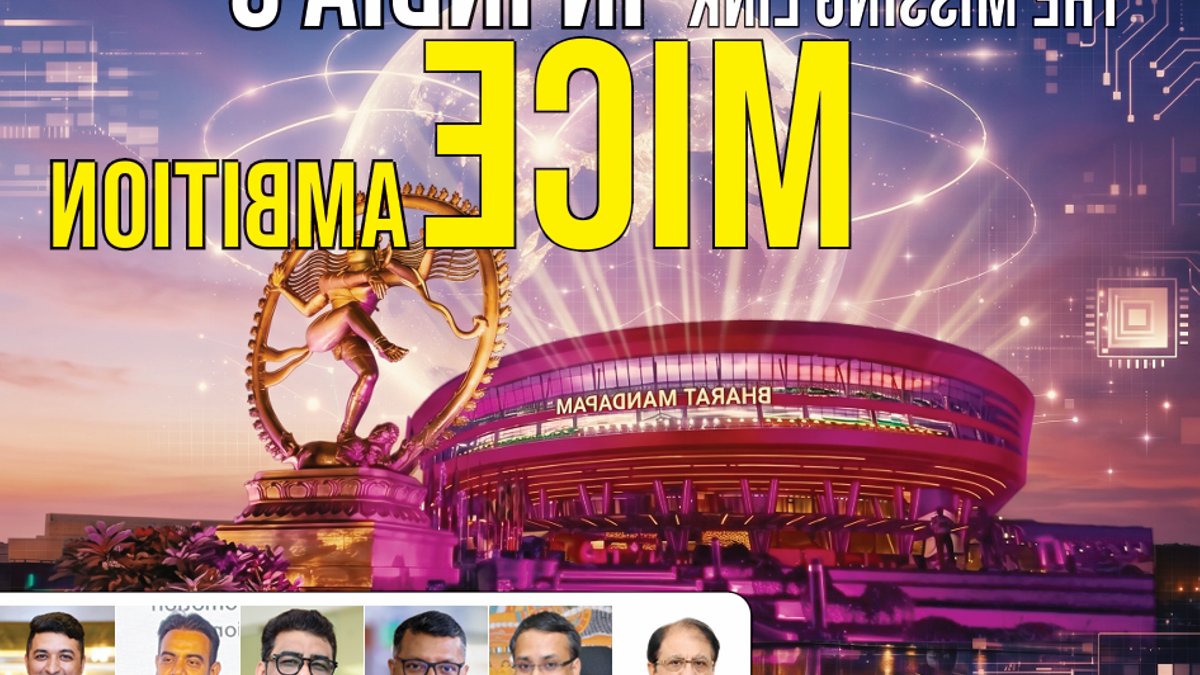
India has spent the last decade building the physical foundations of a global meetings destination, with convention centres, airports, hotels, and connectivity expanding rapidly. The country’s MICE industry is valued at USD 49.4 billion in 2024 and is projected to grow to USD 103.7 billion by 2030, making it one of the fastest-growing segments of the country’s tourism and business events economy.
The opportunity is difficult to ignore, with Asia-Pacific already accounting for 44% of the global MICE market, and India enjoying a significant cost advantage over many competing Asian destinations. Emerging cities such as Jaipur, Kochi, Indore, and Bhubaneswar are broadening the country’s MICE footprint beyond the traditional metro markets, while new convention infrastructure is creating the capacity to host larger and more sophisticated international events.
Challenges in Attracting Global Business Events
Despite its expanding infrastructure, India continues to lose international bids to destinations such as Singapore, Dubai, and Thailand, where policy support, professional convention bureaus, destination branding, and government-industry coordination are often as important as the venues themselves. The gap is no longer about infrastructure; it is about positioning.
Industry leaders and policymakers increasingly believe that the country’s biggest challenge is the absence of a unified destination marketing and bidding ecosystem. A coordinated national strategy, stronger convention bureaus, international bidding support, incentive frameworks, AI-enabled event capabilities, and a globally consistent Brand India narrative are emerging as the critical pieces of the puzzle.
Chander Mansharamani, Vice Chairman, India Convention Promotion Bureau (ICPB), believes the missing link is a coordinated destination marketing and bidding ecosystem. “International associations choose destinations based not only on venues but also on policy support, ease of doing business, financial incentives, convention bureau assistance, and destination visibility. Without a unified national strategy, India continues to lose opportunities despite its strong infrastructure,” he said.
“Leading MICE destinations combine world-class venues with coordinated destination marketing, professional convention bidding, seamless visa and customs processes, excellent connectivity, and close collaboration between government and industry,” he added.
Read Also: Marriott to Open Three Hotels in New Zealand by 2029
Building Globally Competitive MICE Destinations
According to Yogesh Mudras, Managing Director – India, inD, the focus must now shift to how effectively India positions, promotes, and bids for international events. Winning global conventions today requires a coordinated ecosystem comprising destination branding, professional convention bidding, policy support, and strong industry-government collaboration.
Nitin Sachdeva, Managing Director, HelmsBriscoe, said that from the perspective of global meeting sourcing, India increasingly makes the longlist on the strength of its venues and cost competitiveness, but falls away at the bidding stage. “Infrastructure gets you considered; it doesn’t win you the mandate. The missing link is the demand-side machinery: a coordinated body that proactively bids for events, backs them with policy and incentives, and makes the destination easy to buy,” he expressed.
The need for city-level MICE promotion bureaus is becoming increasingly important, with the Ministry of Tourism encouraging states to establish city-level MICE promotion structures capable of bidding for international conferences.
Harikishore S. IAS, Joint Secretary, Ministry of Tourism and Chairman, ICPB, shared that the Ministry has been conducting regional meetings and sharing model frameworks with states interested in establishing convention bureaus. The Hyderabad model has become a reference point, with the city bidding for 120 ICCA-qualified international conferences and securing 40 of them in the past decade.
As the Indian MICE industry continues to grow, the need for a unified national strategy and stronger convention bureaus becomes increasingly important. States including Gujarat and Karnataka are now studying the Hyderabad structure as they develop similar institutional frameworks.
The India Trade Promotion Organisation (ITPO) is also working to create a broader national MICE promotion architecture, with Dr Neeraj Kharwal, IAS, Managing Director, ITPO, stating that the organisation is looking beyond individual venues to create a more integrated promotional framework. ITPO has initiated work on a broader MICE promotion bureau that includes Bharat Mandapam, Yashobhoomi, and the India Exposition Mart Limited (IEML), Noida.
Creating a National MICE Promotion Architecture
Industry stakeholders broadly agree that India needs a long-term National MICE marketing strategy led jointly by government and industry. Chander Mansharamani proposed strengthening national and state convention bureaus, creating dedicated international bidding support, establishing a marketing and bidding corpus fund, and introducing targeted incentives for international conferences to make India a more attractive destination for global organisers. Yogesh Mudras, Managing Director – India, inD, believes that India’s MICE strategy should move beyond promotion to positioning, with the objective of positioning India not simply as an affordable destination, but as a country where business, innovation, talent, and market opportunity converge.
Read Also: Star Alliance, Incheon Airport Partner on Lounge Operations
Nitin Sachdeva stated that India’s strategy should rest on three pillars: an empowered national convention bureau with the budget and mandate to coordinate states, bid for association and corporate business, and serve as a single window for organisers. A data-led destination brand that targets the specific buyers and sectors India can genuinely win, rather than broadcasting to everyone, is also essential. Additionally, a competitive incentive and subvention framework should be established, with Sachdeva noting that India’s real differentiators – a strong cost advantage and a diversity of destinations from metros to emerging Tier-II cities – should anchor that story and be told consistently at global platforms.
The role of policy and government support remains essential, with Ubaid Ahmad expressing that policy support, professional convention bidding, and destination branding are the foundation of every successful MICE destination. The establishment of a National MICE Bureau would be a significant step forward, leading global bidding efforts, coordinating destination marketing, and strengthening India’s position as a preferred destination for international business events. As the Indian MICE industry continues to evolve, the importance of AI, ESG, and market intelligence will only continue to grow, with industry stakeholders emphasizing the need for a unified destination marketing framework and a globally consistent Brand India narrative.
India’s MICE industry will continue to grow, driven by its strong infrastructure and cost competitiveness. The focus now shifts to creating a coordinated ecosystem that can effectively position, promote, and bid for international events.
The Ministry of Tourism will continue to play a key role in promoting India’s MICE industry, with Harikishore S. IAS leading the efforts to establish city-level MICE promotion structures and create a broader national MICE promotion architecture.
The India Trade Promotion Organisation (ITPO) will also continue to work towards creating a more integrated promotional framework, with Dr Neeraj Kharwal, IAS, Managing Director, ITPO, overseeing the development of a broader MICE promotion bureau.
As India’s MICE industry continues to evolve, it is likely that the country will become an increasingly important player in the global MICE market, with its strong infrastructure, cost competitiveness, and diverse range of destinations making it an attractive option for international event organisers.

Marriott to Open Three Hotels in New Zealand by 2029


